hard landscaping · 4 min read
Fixing a Waterlogged Garden in Knutsford
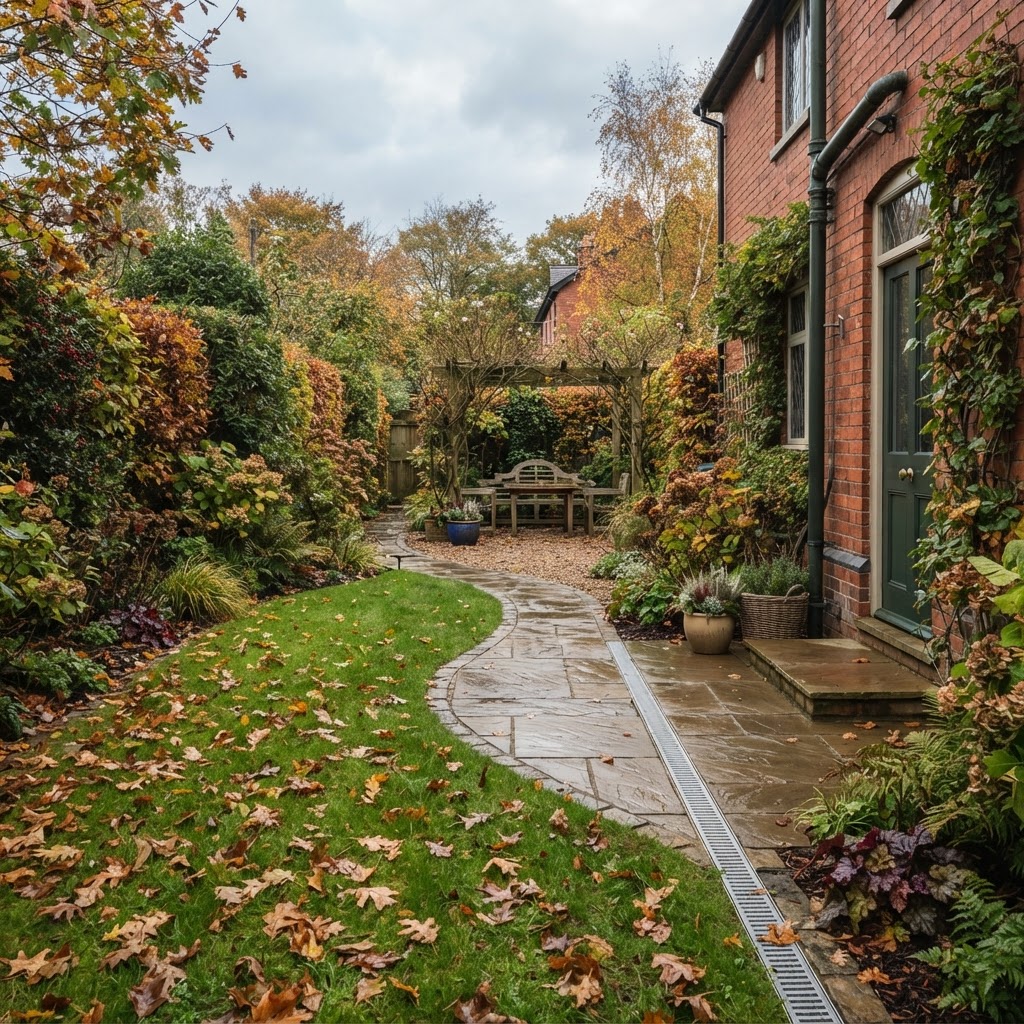
Diagnosing and Fixing a Waterlogged Garden in Winter
Tackling a waterlogged garden during the winter months requires identifying the root cause of poor drainage and implementing practical, long-term solutions to protect your lawn and patios.
Heavy winter rainfall can quickly turn a beautiful outdoor space into an unusable, muddy swamp. For homeowners dealing with a waterlogged garden Knutsford and the surrounding areas, understanding how to manage excess water is essential. Clay-heavy soils, common in parts of South Manchester and Cheshire, often exacerbate the issue, leading to surface water that simply has nowhere to go.
Identifying the Cause of a Soggy Lawn
Before investing in solutions, it is worth considering why your garden is holding water. A soggy lawn Knutsford homeowners often experience can be caused by compacted soil, high water tables, or poorly designed hard surfaces that direct runoff into planted areas. According to the Waterlogging and Flooding Solutions | RHS Advice, if you hard landscape part of your garden, more surface runoff has to be absorbed by a smaller area of soil, which increases the risk of waterlogging.
To diagnose the issue, observe your garden after heavy rain. Puddles that remain for more than 48 hours typically indicate a drainage problem. Check if the water is pooling near your property's foundations, which may require immediate attention, or if it is isolated to a low-lying area of the lawn.
Practical Garden Drainage Options
Effective garden drainage Knutsford properties need can range from simple aeration to the installation of underground systems.
- Aeration and Top Dressing: For mild compaction, spiking the lawn with a garden fork can help. The Waterlogged Lawns: Solutions | RHS Advice notes that compacted soil can be aerated to improve drainage and grass growth. Brushing horticultural sharp sand into the holes may help keep them open.
- French Drains: This involves digging a trench, laying a perforated pipe, and covering it with gravel. It can effectively redirect surface water away from problem areas to a suitable discharge point.
- Soakaways: A soakaway crate system stores excess rainwater underground and releases it slowly into the surrounding soil. This is often a highly effective method for managing winter drainage Cheshire weather brings, though it requires suitable soil permeability to function correctly.
Lawn Recovery and Hard Landscaping Care
Winter is generally about damage limitation. Keep off the saturated soil as much as possible to avoid worsening compaction. Once the ground begins to dry in spring, you can assess the damage and begin recovery through overseeding and feeding.
Paths and patios also suffer during wet winters. Standing water can encourage algae and moss, making surfaces hazardous. While no surface is entirely slip-proof, regular garden maintenance and professional pressure washing can remove organic build-up, making your paving cleaner and safer to walk on. If your patio constantly floods, you may need to evaluate your hard landscaping setup to ensure adequate gradients and channel drains are in place.
Questions Knutsford homeowners ask
Can I fix a waterlogged lawn in winter?
Winter is primarily a time for diagnosis and temporary relief rather than major earthworks. You can carefully aerate mildly waterlogged areas with a fork if the ground is not completely saturated or frozen. However, heavy machinery and extensive drainage installations are usually best left for drier conditions to avoid destroying the soil structure.
Do I need planning permission for garden drainage?
In most cases, installing a basic French drain or soakaway within your own property boundaries falls under permitted development. However, if you plan to discharge water into a main sewer, a watercourse, or if you live in a listed building in Wilmslow or Altrincham, you may need consent. It is always worth checking with your local planning authority or the Planning Portal before starting significant work.
How do I stop my patio from flooding?
Patio flooding is often caused by incorrect falls (gradients) or blocked drainage channels. Installing linear channel drains along the edge of the paving can help catch and redirect surface water. Ensuring that adjacent soil levels are lower than the patio surface may also prevent water from backing up onto the stone.
Research and further reading
- Waterlogging and Flooding Solutions | RHS Advice
- Waterlogged Lawns: Solutions | RHS Advice
- Planning Portal: Paving your front garden
Get Professional Help in Cheshire
If you are struggling with garden flooding Cheshire weather brings, MSJ Landscaping is here to help. We provide tailored landscaping and drainage solutions across South Manchester and Cheshire. Request a quote today or Book a site visit to discuss your garden's needs. You can also reach us directly at jaymoore1985@icloud.com or call +447824581310.
Ready to start your project?
Free, no-obligation quotes across South Manchester & Cheshire.