pressure washing · 5 min read
Should You Seal Your Patio After Pressure Washing?
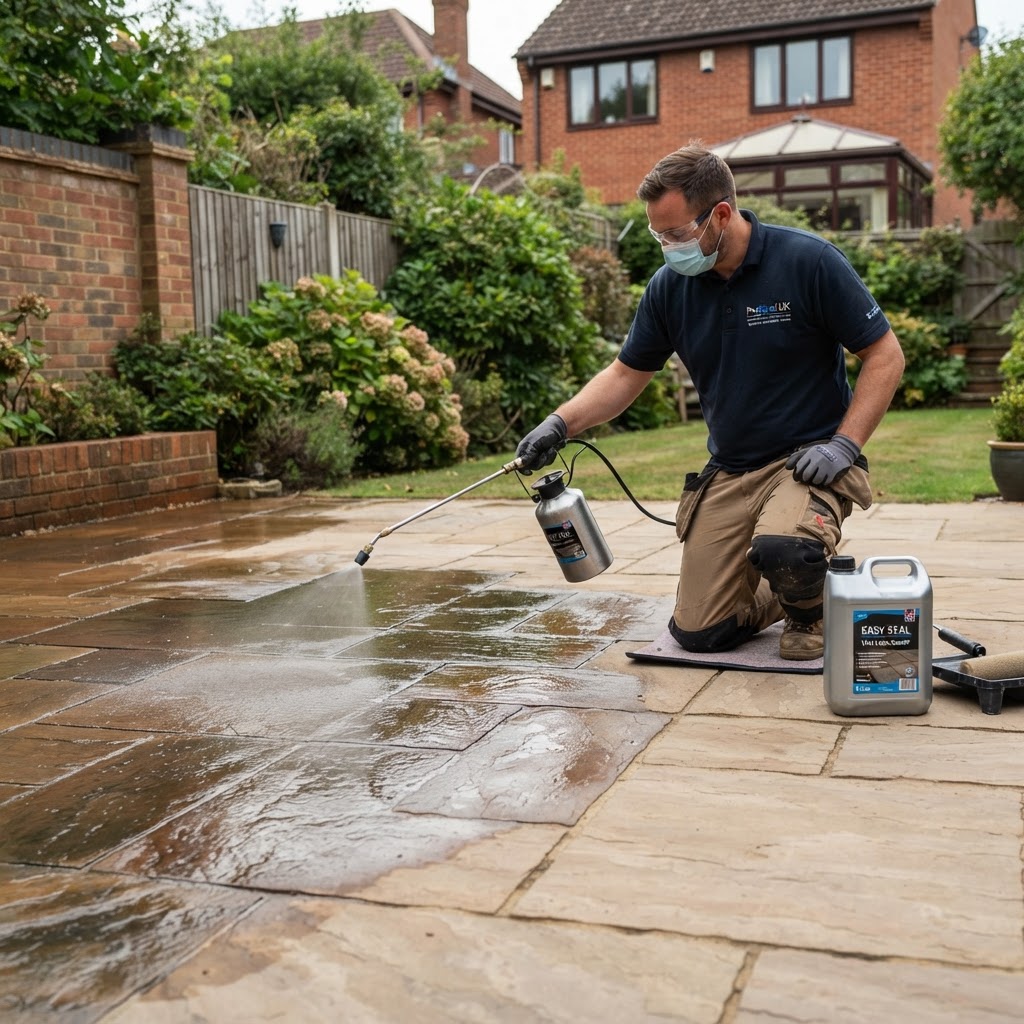
Should You Seal Your Patio After Pressure Washing?
You've just had your patio pressure washed. It looks brand new. The question is: do you leave it as is, or do you seal it? Our answer, in most cases, is yes — seal it. Here's why, and the exceptions where you shouldn't.
Why Seal Your Patio?
Sealing does four things:
1. Repels Stains
A sealer fills the microscopic pores in the surface, making it harder for oil, wine, barbecue grease, and organic matter to penetrate. Spills wipe off instead of staining.
2. Slows Moss and Algae Growth
Moss and algae take hold in the pores of the surface. A sealed surface gives them less to grip onto, so your patio stays cleaner for longer between washes.
3. Stabilises the Jointing
On sand-jointed paving (block paving and some slab patios), sealer locks the sand in the joints. This stops it washing out in heavy rain and prevents weeds from germinating in the joints.
4. Enhances Colour
Some sealers bring out the natural colour of the stone — sandstone in particular looks richer and deeper when sealed. A "wet-look" sealer gives a permanent just-rained appearance.
Which Surfaces Should Be Sealed?
- Indian sandstone: Yes — sandstone is porous and benefits from sealing. Use an impregnating sealer for a natural look, or a surface sealer for a wet-look finish.
- Block paving: Yes — sealing stabilises the joint sand and prevents oil stains.
- Concrete paving: Yes — concrete is porous and stains easily.
- Porcelain: No — porcelain is non-porous and doesn't absorb sealer. A sealer will just sit on the surface and create a slippery film.
- Natural limestone: Yes, but carefully — limestone is soft and acid-sensitive. Use a dedicated limestone sealer, not a general one.
- Tarmac: No — tarmac needs a dedicated tarmac restorer, not a paving sealer.
When to Seal After Pressure Washing
The patio must be completely dry before sealing. This is the most common mistake people make. If there's moisture in the surface when you apply the sealer, it gets trapped underneath and causes a cloudy, patchy finish.
- Wait at least 24–48 hours after pressure washing in dry weather
- Test the surface with a drop of water — if it absorbs, the patio isn't dry enough
- Don't seal in wet or humid conditions
- Don't seal in direct hot sun — the sealer can flash-dry before it penetrates
How Long Does Sealer Last?
- Impregnating sealers: 3–5 years
- Surface (film-forming) sealers: 2–3 years
- Wet-look sealers: 1–2 years (they wear faster under foot traffic)
You'll know it's time to re-seal when water stops beading on the surface and starts absorbing instead.
Professional Sealing vs DIY
DIY sealers are available, but the application needs to be even and thorough. Uneven application leaves patches; too much sealer in one spot creates a glossy, slippery area. Professional application ensures an even coat and the right product for your surface.
Request a free online quote for pressure washing and sealing.
MSJ Landscaping — pressure washing across South Manchester and Cheshire.
Ready to start your project?
Free, no-obligation quotes across South Manchester & Cheshire.