pressure washing · 5 min read
Removing Oil Stains from Block Paving: A Step-by-Step Guide
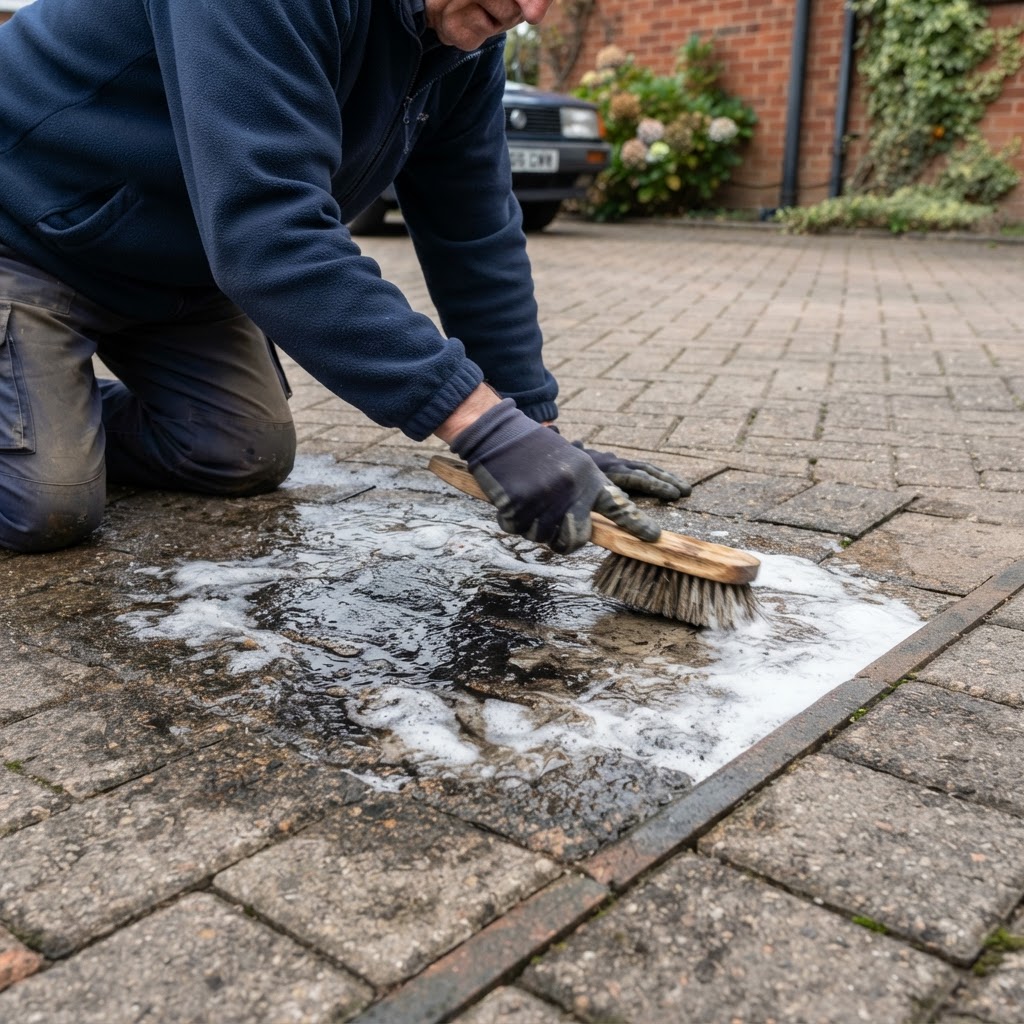
Removing Oil Stains from Block Paving
Oil stains are the most common driveway problem we're asked to fix. Fresh oil is relatively easy to deal with; old, set-in stains take more work — but they're not impossible. Here's our step-by-step process.
Fresh Oil Spills: Act Fast
If the spill has just happened, you have a window of opportunity. The oil is still on the surface and hasn't penetrated the blocks yet.
- Cover the spill with absorbent material — cat litter, sawdust, or dry sand. Leave it for a few hours to soak up the surface oil.
- Sweep up the absorbent material and dispose of it.
- Apply a dedicated oil degreaser — not washing-up liquid, which can leave a residue. Work it in with a stiff brush.
- Rinse with hot water — hot water helps dissolve the oil. A pressure washer on a moderate setting will lift the residue.
- Re-sand the joints if the cleaning has removed the kiln-dried sand.
Most fresh spills will come out completely with this approach.
Older Stains: The Heavy-Duty Method
If the stain has been there for weeks or months, the oil has penetrated the surface of the blocks. A simple wash won't shift it. Here's what we do:
- Apply a professional-grade oil remover — we use products that break down hydrocarbons at a molecular level. These are stronger than domestic cleaners and need careful handling.
- Agitate with a stiff brush — work the product into the stain and leave it for the recommended dwell time (usually 15–30 minutes).
- Pressure wash at moderate pressure — use a fan jet, not a pinpoint, and keep the lance moving. The combination of the chemical and the pressure lifts the stain.
- Repeat if necessary — deep stains may need two or three applications.
- Rinse thoroughly — remove all chemical residue to prevent it affecting the blocks over time.
When the Stain Won't Budge
Some very old, deep stains have penetrated so far into the block that cleaning alone won't remove them. In that case, the simplest solution is to replace the affected blocks. If your driveway was laid properly, there should be spare blocks available — we always recommend keeping a few extras when a new driveway is installed.
Flip the stained block over (if it's not a directional face) or replace it with a new one, re-sand the joints, and the stain is gone.
Preventing Future Stains
- Seal your driveway after cleaning — a good quality sealer fills the pores in the blocks and makes oil much harder to penetrate
- Deal with spills immediately — the faster you act, the easier they are to remove
- Use a drip tray under cars that leak oil
- Keep a bag of cat litter in the garage for instant absorbent
Professional Help
If you've tried the DIY approach and the stain is still there, or if the stain is large and you don't want to risk damaging the blocks, give us a call. We have the equipment and the products to lift most stains without damaging the surface.
Request a free online quote for driveway cleaning and stain removal.
MSJ Landscaping — pressure washing across South Manchester and Cheshire.
Ready to start your project?
Free, no-obligation quotes across South Manchester & Cheshire.