pressure washing · 5 min read
Pressure Washing vs Soft Washing: What's the Difference?
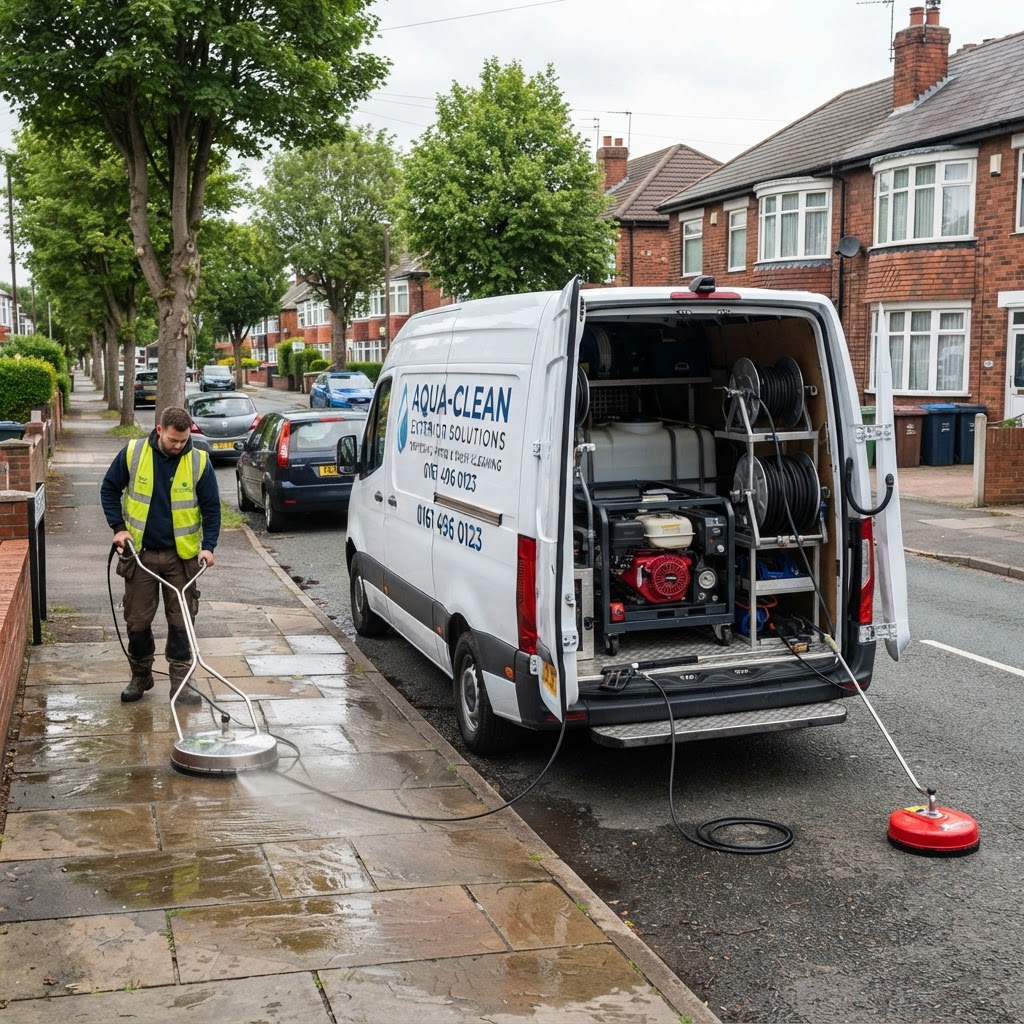
Pressure Washing vs Soft Washing
These two approaches are often talked about as if they're competing methods. They're not — they're different tools for different jobs. Here's what each one does and when to use it.
Pressure Washing
Pressure washing uses high-pressure water — typically 100–250 bar — to physically blast dirt, moss, algae, and grime off a surface. It's fast, effective, and uses no chemicals (or minimal chemicals).
Best for:
- Patios and driveways with heavy grime build-up
- Block paving (with re-sanding afterwards)
- Concrete and tarmac surfaces
- Removing loose moss and algae
- General cleaning of hard, durable surfaces
Limitations:
- Doesn't kill the root of moss and algae — they'll grow back
- Can damage delicate surfaces if used at too high a pressure
- Doesn't remove deep oil or chemical stains on its own
Soft Washing
Soft washing uses low-pressure water (often just tap pressure) combined with chemical cleaners — typically sodium hypochlorite (bleach) and surfactants — to kill moss, algae, and lichen at the root. The chemical does the work; the water just delivers it.
Best for:
- Killing moss, algae, and lichen so they don't grow back quickly
- Cleaning delicate surfaces that can't take high pressure (render, painted surfaces, some natural stone)
- Roof cleaning (pressure washing damages tiles and voids warranties)
- Removing organic staining (green and black algae)
Limitations:
- Slower — the chemical needs time to work (often 30–60 minutes)
- Requires careful handling of chemicals
- Not effective on its own for heavy, ingrained grime
- Needs thorough rinsing to protect nearby plants
When to Combine Both
For many jobs, the best approach is a combination:
- Soft wash first — apply the chemical, let it kill the moss and algae at the root
- Pressure wash second — remove the dead material and any remaining grime
- Rinse thoroughly — clear away all chemical residue
This gives you the best of both worlds — the deep clean of pressure washing with the long-lasting results of soft washing. The moss and algae won't grow back for months or even a year, rather than weeks.
Which Does Your Surface Need?
- Block paving driveway with heavy moss: Soft wash + pressure wash + re-sand
- Indian sandstone patio with green algae: Soft wash + gentle pressure wash
- Roof with moss and lichen: Soft wash only — never pressure wash a roof
- Tarmac driveway with oil stains: Pressure wash with a degreaser
- Render wall with green algae: Soft wash only — pressure washing will damage render
Our Approach
We assess each job and choose the right method — or combination. We're not going to blast a delicate surface with 200 bar just because it's quicker, and we're not going to soft-wash a heavily soiled driveway when it needs proper pressure cleaning.
Request a free online quote and we'll recommend the right approach for your surface.
MSJ Landscaping — pressure washing across South Manchester and Cheshire.
Ready to start your project?
Free, no-obligation quotes across South Manchester & Cheshire.