garden maintenance · 4 min read
Mulching Explained: Why, When, and How Much
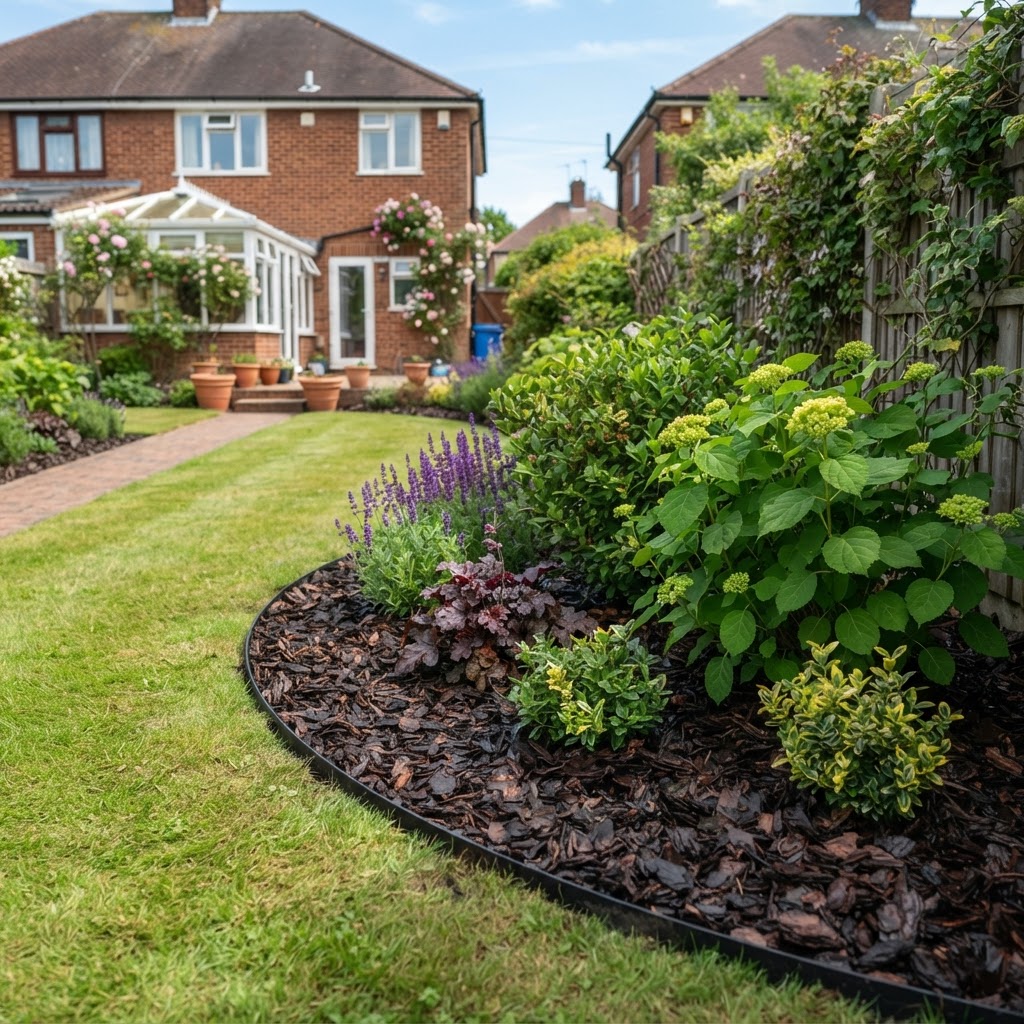
Mulching Explained
If there's one thing we'd recommend to every gardener, it's mulching. It's not glamorous, but it does more for your soil and your plants than any feed, spray, or fertiliser. Here's the what, why, and how.
What Is Mulch?
Mulch is a layer of material spread over the surface of the soil. The most common types:
- Bark chippings — the most popular choice for ornamental borders
- Compost — well-rotted garden compost or commercial soil improver
- Leaf mould — free if you collect your own autumn leaves
- Gravel or slate — for Mediterranean-style or low-maintenance schemes
- Strulch — a mineralised straw mulch that also deters slugs
Why Mulch?
Mulch does five things at once:
- Suppresses weeds — a thick layer blocks light, so weed seeds can't germinate
- Retains moisture — it reduces evaporation, so you water less in summer
- Regulates soil temperature — keeps roots cool in summer and warm in winter
- Improves soil structure — organic mulches break down and add organic matter
- Looks good — a fresh mulch makes a border look tidy and finished
When to Apply Mulch
Late autumn (November): After you've cleared the borders and cut back perennials. This protects the soil from winter rain and frost.
Early spring (March): Before the weeds get going and while the soil is still moist. This locks in the winter moisture for the growing season ahead.
Avoid mulching in summer when the soil is bone dry — you'll just trap the dryness in. Water thoroughly first, then mulch.
How Much Do You Need?
The right depth is 5–7cm (2–3 inches). Less than that and weeds will push through. More than that and you risk smothering your plants and encouraging rot.
To calculate how much you need:
- Measure the area of your borders in square metres
- Multiply by 0.06 (for a 6cm depth) to get cubic metres
- Bark is usually sold in 50–70 litre bags — divide your cubic metres by 0.06 to get the number of bags
How to Apply It
- Weed first — mulch on top of weeds just hides them temporarily
- Water the soil if it's dry
- Spread the mulch evenly — don't pile it against plant stems or tree trunks (it can cause rot)
- Leave a gap around the base of each plant — a couple of centimetres is enough
How Often?
Once a year is enough for most borders. Organic mulches (bark, compost) break down and need topping up. Inorganic mulches (gravel) last longer but still need refreshing occasionally as they settle.
Book a maintenance visit if you'd like us to mulch your borders this season.
MSJ Landscaping — garden maintenance across South Manchester and Cheshire.
Ready to start your project?
Free, no-obligation quotes across South Manchester & Cheshire.